The Window of Tolerance: Why Trauma Makes You Flip Between Shutdown and Overwhelm
Learn what the window of tolerance is, how trauma affects nervous system regulation, and why you may feel overwhelmed one moment and shut down the next.
Have you ever noticed that your reactions seem to exist at two extremes?
One moment, you feel completely overwhelmed.
Your heart is racing.
Your thoughts will not slow down.
You are irritated, anxious, or panicking.
Then suddenly, it is almost like someone turned everything off.
You feel numb.
Exhausted.
Disconnected.
You do not want to talk to anyone.
You might even feel like you are watching yourself go through the day rather than actually experiencing it.
If this sounds familiar, you may have heard the term window of tolerance.
The window of tolerance is a helpful way of understanding how our nervous system responds to stress and why trauma can sometimes make emotional regulation feel so difficult.
What Is the Window of Tolerance?
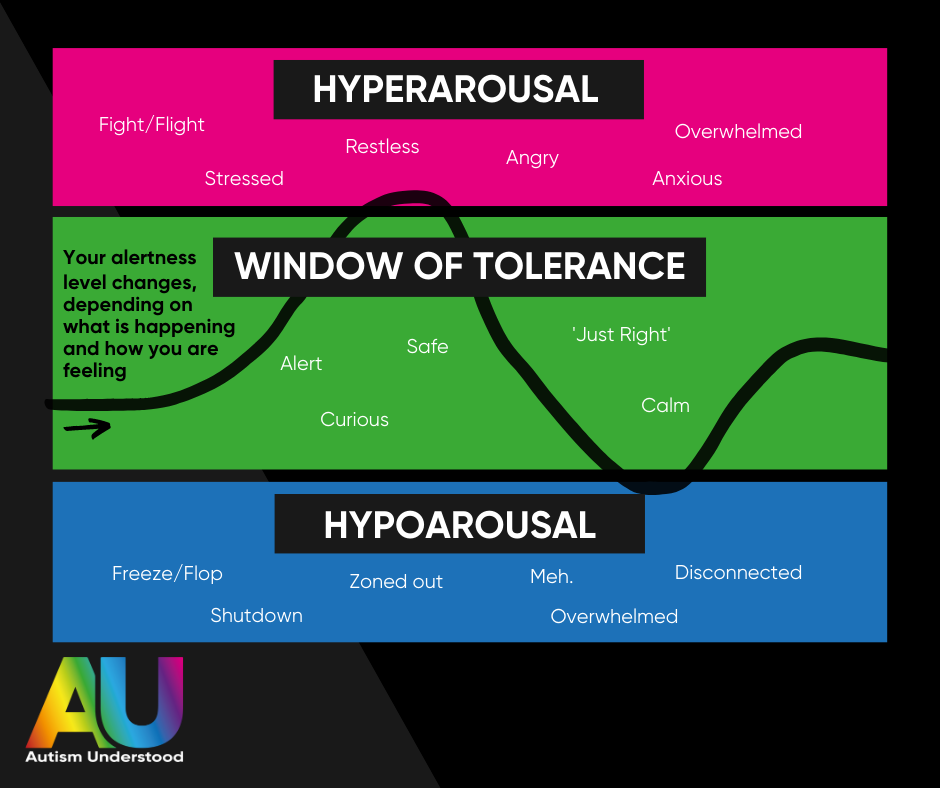
Your window of tolerance is essentially the range of emotional and physiological arousal in which you are able to function effectively.
When you are within this window, you can generally think clearly, communicate, make decisions, experience emotions, and respond to challenges without becoming completely overwhelmed.
You will still experience stress.
You will still get angry, sad, anxious, or frustrated.
Being within your window does not mean being calm all the time.
It means you have enough nervous system capacity to stay present with what you are experiencing.
Trauma can make that window narrower.
That means it may take less stress to push you outside of it.
What Happens When You Go Above Your Window?
When your nervous system becomes highly activated, you may enter a state sometimes described as hyperarousal.
This is the overwhelmed end of the spectrum.
You may experience:
Racing thoughts.
Anxiety.
Panic.
Irritability.
Anger.
Restlessness.
Difficulty concentrating.
Feeling constantly on edge.
A strong urge to escape or fix whatever is happening.
Your body is essentially preparing for action.
This can be part of the fight or flight response.
The problem is that your nervous system may activate this response even when there is no immediate physical danger.
A difficult conversation.
A stressful email.
Someone raising their voice.
A disagreement with your partner.
A reminder of something from the past.
Your body may respond as though you need to protect yourself right now.
What Happens When You Go Below Your Window?
The other side of the experience is often described as hypoarousal.
Instead of becoming overwhelmed, your nervous system may move toward shutting down.
You might feel:
Numb.
Exhausted.
Disconnected.
Foggy.
Detached.
Unmotivated.
Unable to communicate.
Like you simply cannot deal with anything else.
Some people describe this experience as "checking out."
You may want to sleep.
You may stop responding to messages.
You may avoid everyone.
You may feel like you are emotionally somewhere far away from what is happening around you.
This can be a protective response too.
When your nervous system determines that fighting or escaping does not feel possible, shutting down can become another way of coping.
Why Trauma Can Narrow Your Window of Tolerance
When you experience trauma, your nervous system learns from what happened.
If you lived through experiences where danger was unpredictable or ongoing, your body may become more sensitive to signs of threat.
You may become very good at detecting changes in people's moods.
You may notice small shifts in someone's tone of voice.
You may immediately sense when something feels "off."
These skills may have helped you survive.
But later in life, the same sensitivity can leave you feeling activated by situations that are not actually dangerous.
Your nervous system learned:
"I need to be ready."
Why You May Flip Between Overwhelm and Shutdown
This is something many people find confusing.
You might think:
"Why can I handle everything one day and completely fall apart the next?"
It may not be that you are inconsistent.
You may simply be moving outside your window of tolerance.
When stress pushes you above your window, you may become anxious, reactive, or angry.
If the activation continues or becomes too intense, your nervous system may move in the opposite direction and shut down.
This can create a cycle of:
Overwhelm.
Shutdown.
Recovery.
Overwhelm again.
Understanding this cycle can help you replace self criticism with curiosity.
How Do You Widen Your Window of Tolerance?
The goal of nervous system regulation is not to make yourself calm all the time.
Life is going to bring stress.
The goal is to increase your capacity to experience difficult emotions without becoming completely overwhelmed or disconnected.
This can happen gradually through things such as:
Learning to recognize your body's signals.
Developing grounding skills.
Practicing emotional awareness.
Creating supportive routines.
Getting adequate rest.
Building safe relationships.
Learning healthy boundaries.
Working with a trauma informed therapist.
Therapy can help you recognize what pushes you outside your window and develop strategies for returning to a more regulated state.
Trauma Therapy Can Help You Understand Your Patterns
Sometimes simply knowing what is happening can change the way you see yourself.
Instead of:
"Why am I so dramatic?"
You may begin thinking:
"My nervous system is overwhelmed."
Instead of:
"Why do I shut down when someone gets upset?"
You may begin thinking:
"Something about this situation is activating a protective response."
That shift matters.
It creates room for compassion.
It also creates room for change.
Trauma therapy can incorporate approaches such as EMDR, somatic therapy, mindfulness, and other trauma informed strategies to help you understand your responses and develop greater capacity for regulation.
Frequently Asked Questions
What is the window of tolerance?
The window of tolerance describes the range of nervous system activation where you can remain present, emotionally engaged, and able to function effectively.
What does it mean to be outside your window of tolerance?
You may experience either heightened activation, such as anxiety, panic, anger, and restlessness, or reduced activation, such as numbness, exhaustion, and disconnection.
Does trauma make your window of tolerance smaller?
Trauma can affect nervous system functioning and make some people more sensitive to stress and perceived threats. This can make it feel harder to remain regulated during challenging situations.
Can therapy widen your window of tolerance?
Trauma informed therapy can help you recognize your nervous system responses, develop regulation skills, process traumatic experiences, and gradually build greater capacity for difficult emotions and situations.
You Are Not Too Sensitive
If you constantly feel like you are either doing too much or feeling nothing at all, there may be more happening beneath the surface.
Your nervous system may have learned to protect you by moving quickly into survival mode.
That does not mean you are broken.
It means your body learned how to survive.
And with support, you can learn new ways of responding.
At Raha Wellness, we provide compassionate, trauma informed telehealth therapy for adults, children and families throughout Arizona and Oregon. If you are struggling with anxiety, emotional overwhelm, shutdown, or feeling disconnected from yourself, therapy can help you understand what your nervous system is communicating and begin building a greater sense of safety.
You do not have to fight your nervous system.
You can learn to work with it.